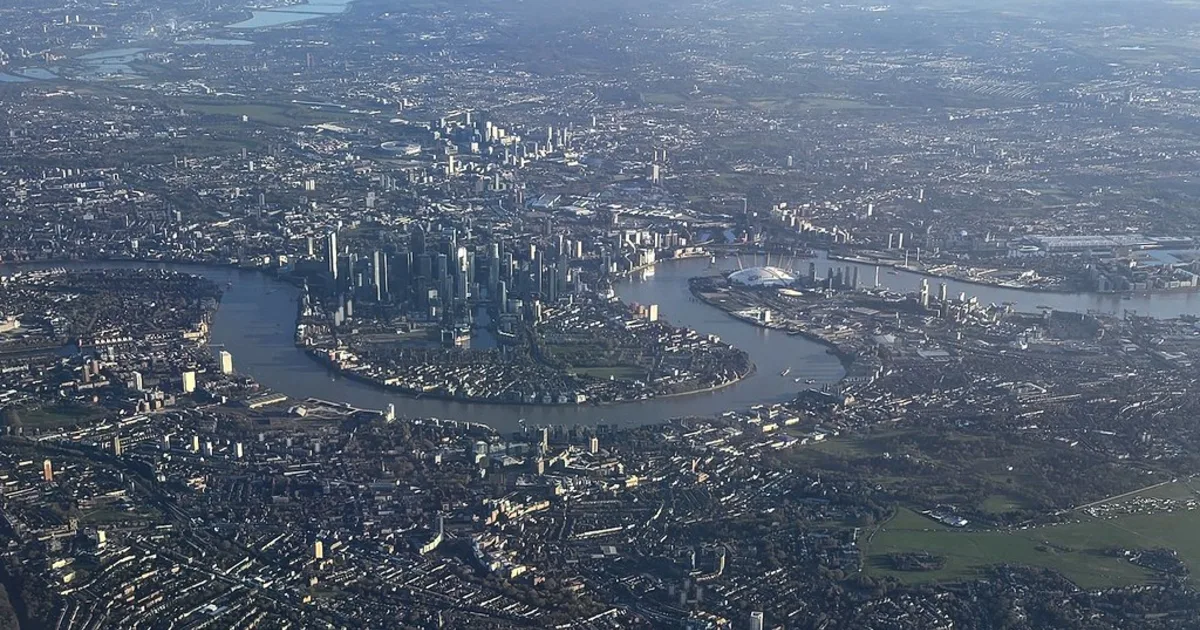
Stand on two bridges in the same week and you can see the contrast plainly. Over one river runs a single deep channel that swings from bank to bank. Over the next, the flow splits around bars of gravel into a shifting braid. Both are doing the same job, moving water and sediment downhill, but they have settled into very different forms.
Channel pattern is one of the first things a hydrologist or river engineer reads from a site, because it carries information about how the channel behaves over time. The useful point is that pattern is not arbitrary. It emerges from a small set of physical controls that can be measured or estimated, which means a pattern can be anticipated and, within limits, explained.
The controls that set the pattern
Four variables do most of the work: valley slope, the volume and variability of discharge, the size and supply of sediment, and the strength of the banks. Steeper slopes carry more stream power per unit length. A larger sediment load, especially coarse bedload, has to be moved or deposited somewhere. Banks held together by cohesive silts or by vegetation roots resist erosion; banks of loose sand or gravel give way readily.
Meandering tends to appear where slopes are gentle, where the load is finer and more suspended than coarse, and where banks are relatively strong. The flow concentrates in one channel and erodes the outer bends while depositing on point bars on the inside, so the channel migrates sideways while keeping a single thread. Braiding tends to appear where slopes are steeper, where a heavy coarse load arrives faster than the flow can carry it through, and where banks are weak. The channel deposits mid-stream bars, splits around them, and reworks the whole bed during high flows.
A continuum, not two boxes
It helps to treat pattern as a continuum rather than a pair of categories. Between the textbook meander and the textbook braid sit wandering and anastomosing channels, which show features of both. Empirical thresholds relating slope to bankfull discharge, sometimes called slope-discharge or stream-power thresholds, can separate meandering from braided reaches reasonably well, but they describe tendencies rather than hard rules. A reach can sit close to a threshold and switch character after a single large flood or a change in sediment supply.
Why the distinction matters for engineering
The two patterns behave differently in ways that change how you site and design infrastructure. A meandering channel moves laterally in a fairly predictable direction over years, so the relevant question for a bridge or a buried pipeline is how far the bends will migrate within the asset's design life. A braided reach is less predictable in plan but tends to occupy a wide active corridor, so the safer assumption is that flow can reoccupy almost any part of that corridor during a large event.
This bears directly on flood hazard. Confining a braided river to a single engineered channel raises velocities and concentrates sediment scour, which can undermine structures and shift the problem downstream. It also connects to restoration practice: re-meandering a straightened reach only holds if the slope and sediment regime actually support a single sinuous thread. Where they do not, the channel will work back toward the pattern its controls dictate.
For practitioners, the takeaway is to read pattern as evidence and then check it against measurements rather than assuming permanence. If you want the upstream side of this story, our explainer on recurrence intervals and the 100-year flood covers how the discharge that shapes these channels is estimated, and our look at nature-based flood solutions discusses giving rivers the room their pattern needs.